Criminal law
Alcohol check at the wheel: your rights
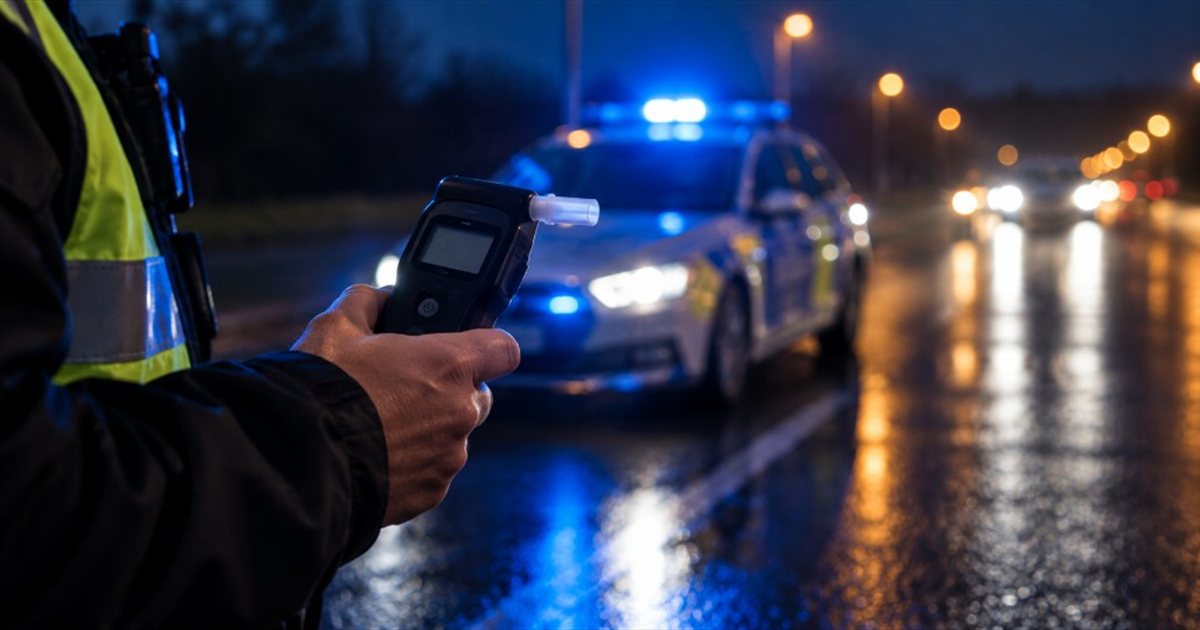
A patrol stops you, shines a light into the car and asks one question: how much have you had to drink today. Few people know exactly what the officer may demand, what happens if they refuse the breath test, and whether refusal is a sensible choice at all. Here is the sequence, from the roadside check to what happens to your driving licence.
What an officer may require at the roadside
An officer may ask you to take a breath test at any time, without a specific suspicion. The request itself is enough. A driver must comply under Section 5(1)(f) of Act No. 361/2000 Coll., on Road Traffic. For other addictive substances the duty is in Section 5(1)(g) of the same Act. It applies to every driver, not only drivers of motor vehicles. On the other hand, nobody can be forced to take a breath test against their will.
If you disagree with the result of the screening breath test, you may ask for a professional medical examination, usually a blood or urine sample, which is more accurate. Whether a blood sample is safe given your health is decided by a doctor, not by the officer or by you. Say any health concern to the doctor. Otherwise a refusal will not be treated as justified.
Take the test, or refuse it? What to weigh at a higher level
Refusing the test is not a trick that avoids a penalty. It is a separate offence under Section 125c(1)(d) of the Road Traffic Act, and the statute punishes it more severely than driving with a lower level of alcohol. Driving with alcohol up to 1 per mille (Section 125c(1)(c) of the Road Traffic Act) is sanctioned by a fine of CZK 7,000 to 25,000, a driving ban of 6 to 18 months, and, if the level is over 0.3 per mille, 6 penalty points. Refusing the test brings a fine of CZK 25,000 to 75,000, a driving ban of 18 months to 3 years, and 6 penalty points as well. In a resolution of 2 February 2011, Case No. 8 Tdo 78/2011 (published as No. 3/2012 in the Collection of Criminal Decisions), the Supreme Court confirmed that this is a different act from driving under the influence. The two must not be treated as the same thing.
That is why some drivers who know their blood alcohol is high consider refusing the test. They face a stricter offence, but they avoid the risk that the measured value will lead to a prosecution for endangering under the influence of an addictive substance under Section 274 of the Criminal Code, which carries imprisonment and a record in the Criminal Register.
That calculation has one important limit. Refusing the test does not rule out a criminal prosecution. It only makes the prosecution harder to prove. Settled case law allows the state that excludes fitness to drive to be proved without a measured value: by the testimony of the officers, passengers or doctors, and by the manner of driving or the driver’s behaviour (resolution of the Supreme Court of 22 August 2007, Case No. 5 Tdo 874/2007). If intoxication is obvious from other circumstances — a crash, an unsteady walk, the smell of alcohol, slurred speech — refusing the test does not by itself extinguish criminal liability.
It is a decision with an uncertain outcome. It is worth discussing it with a lawyer by phone at once, ideally still at the scene, before you choose either course.
Seizure of the driving licence on the spot
If the driver is suspected of driving under the influence of alcohol or another addictive substance, or has refused the test, the officer may seize the driving licence on the spot under Section 118b(1) of the Road Traffic Act. If the driver does not have the licence with them, it can be declared seized under Section 118b(6) of the same Act.
Neither seizure of the licence nor preventing the driver from continuing the journey under Section 118a of the Road Traffic Act is automatic. In judgment Case No. 10 As 174/2017 (published as No. 3749/2018 Coll. of the Supreme Administrative Court), the Supreme Administrative Court stressed that the statutory words “may”, “is entitled” and “it is possible” mean the officer, or the administrative authority, has a discretion. The consequence the statute allows does not follow automatically from every suspicion. Immediate seizure is sometimes, paradoxically, the better outcome, because the time the licence is withheld counts towards the driving ban.
What happens to the licence next
Within five working days of being notified of the seizure, the municipal authority of a municipality with extended powers opens proceedings on further withholding of the licence under Section 118c(1) of the Road Traffic Act — or it does not open them, or it discontinues them, if withholding would be disproportionate in the circumstances. Under Section 118c(3) the licence is returned without undue delay if the proceedings were not opened, were discontinued, or ended in a final decision that did not impose a driving ban.
This is the stage at which the seizure can still be challenged. If withholding the licence is disproportionate to the circumstances of the case, that can be raised in the proceedings.
Where an offence ends and a crime begins
Although the Czech Republic applies what is called zero tolerance to alcohol at the wheel, the practical lower limit of an offence, under the methodology of the Ministry of Transport, is 0.24 per mille. The 0.3 per mille line decides the penalty points. Criminal liability is a separate question. Under settled court practice, a level of about 1 g/kg of alcohol in the blood means absolute unfitness to drive and is as a rule the criminal offence of endangering under the influence of an addictive substance under Section 274(1) of Act No. 40/2009 Coll., the Criminal Code. Even at a lower level, from about 0.8 g/kg, a criminal offence can be considered if the reduced ability to drive is proved in another way, typically from the manner of driving or from a crash.
If a driver under the influence causes a crash, injures another person, or reoffends within the last two years, the stricter range in Section 274(2) of Act No. 40/2009 Coll. applies: imprisonment from six months to three years.
What to do when the police stop you
- A request for a breath test is a duty. If you have drunk little or nothing, there is no point in refusing. Refusal is itself an offence with a real sanction.
- If you are sure the level is high, weigh it soberly. Refusing the test is a lawful option with its own strict sanction, and it does not guarantee that you will avoid a criminal prosecution. It is better to take advice from a lawyer by phone at once than to decide on impulse.
- If you disagree with the screening test, you may ask for a professional medical examination.
- Insist that the check is properly recorded, and ask for a copy of the record and for confirmation that the licence was seized.
- You do not have to give a detailed account of the incident on the spot. The necessary cooperation with the measurement itself is enough.
In short
An alcohol check is unpleasant, but the rules are clear, for the driver and for the police. At a low level, refusing the test makes no sense. At a high level it is a real dilemma between a certain strict offence and the risk of a criminal prosecution, which refusal does not remove. In our criminal defence practice we regularly deal with seized driving licences and drink-driving charges, and we can give a first consultation by phone before you resolve the situation on the spot.
If you have a record of the licence seizure or a summons to give an explanation to the police, send us the papers for review. We will look at the matter before the time limit for a response starts to run.
Common questions
Do I have to take a breath test?
Yes. An officer may ask you to take a breath test without a specific suspicion. A driver must comply under Section 5(1)(f) of Act No. 361/2000 Coll., on Road Traffic. If you disagree with the screening test, you may ask for a professional medical examination. On the other hand, nobody can be forced to take a breath test against their will.
What happens if I refuse the breath test?
Refusal is a separate offence under Section 125c(1)(d) of the Road Traffic Act. It brings a fine of CZK 25,000 to 75,000, a driving ban of 18 months to 3 years, and 6 penalty points. Driving with alcohol up to 1 per mille is sanctioned by a fine of CZK 7,000 to 25,000 and a driving ban of 6 to 18 months, and, if the level is over 0.3 per mille, by 6 penalty points as well.
Will refusing the test keep me out of a criminal prosecution?
Maybe. Refusal does not rule out a criminal prosecution. It only makes it harder to prove. Unfitness to drive can be proved without a measured value — by witness testimony, by the manner of driving, or by the driver’s behaviour.
Can the police seize my driving licence on the spot?
Yes, if the driver is suspected of driving under the influence of alcohol or another addictive substance, or has refused the test. Seizure is not automatic. Within five working days of the notification, the municipal authority of a municipality with extended powers either opens proceedings on further withholding, or does not open them if withholding would be disproportionate.
At what level does alcohol become a criminal offence?
Although zero tolerance applies, the practical lower limit of an offence under the Ministry of Transport methodology is 0.24 per mille. The 0.3 per mille line decides the penalty points. From about 1 g/kg of alcohol in the blood, court practice treats the driver as absolutely unfit to drive, and the case is as a rule the criminal offence of endangering under the influence of an addictive substance under Section 274(1) of the Criminal Code. From about 0.8 g/kg a criminal offence can also be considered if the reduced ability to drive is proved in another way.
Note: This article is general information on the topic. It is not legal advice on a particular matter and it does not create a lawyer–client relationship. To have your situation assessed, arrange a consultation.